
LEGO® Serious Play® workshops, built around the decision on your table
Every Brick Spark session runs the same backbone — everyone builds, everyone speaks, the room decides. What changes is the question the room is there to answer. These are the six rooms we're asked into most, and what each one walks out with.
Same method, different question. Every build on this page starts unstable and ends with a decision brick on top — run one and watch it land.
Fig. 01 — the table before the room arrives. Press a brick to jump to its build.
Six rooms, six different builds.
Same method, different question. Each format below is named for the meeting it replaces — and for what that meeting keeps failing to produce. Every build starts unstable. Run it to see the decision land.
Strategy Day
Strategy & planning daysThe team walks in with a direction everyone nods at but nobody can repeat back the same way twice. Talking about it again produces the same slides and the same silence.
The room walks out withwhich of the competing priorities gets funded this quarter — and the trade-offs the whole room watched get made, not just heard announced.
Build plan 01 · parts: 3 + 1 decision
Walks in — unstable
Kickoff
Project kickoffsThere's a plan with names against tasks, and a set of risks nobody has said out loud because the kickoff meeting isn't the place you admit doubt.
The room walks out withwho owns each workstream from day one, and the risks on the table before they cost anything.
Build plan 02 · parts: 3 + 1 decision
Walks in — unstable
Wrap-up
Project wrap-ups & retrospectivesEveryone carries a private version of what went wrong. In a talked retro, the loudest version becomes the official one and the sharpest read never gets airtime.
The room walks out withwhat actually happened, agreed by the people who lived it — and what the team does differently next time, in writing.
Build plan 03 · parts: 3 + 1 decision
Walks in — unstable
Reset
Team resets after changeA restructure, a merger, a new leader. The org chart changed in a day; how the team actually works together didn't, and nobody has stopped to rebuild it.
The room walks out withwhat the team stops doing, and the ground rules a newly formed team holds each other to.
Build plan 04 · parts: 3 + 1 decision
Walks in — unstable
Cross-team
Cross-team problem solvingTwo teams, each certain the other's process is the problem. Every meeting about it turns into a polite exchange of blame with an agenda attached.
The room walks out withone shared model of the problem that both teams built — and a fix neither side has to be talked into.
Build plan 05 · parts: 3 + 1 decision
Walks in — unstable
Rollout
System rollouts & go-livesA new CRM, an ERP, a payroll system. There's a go-live date, a training schedule and a project plan — what there isn't is agreement on how the team actually works once it lands, so the old process quietly survives inside the new tool.
The room walks out withhow the team works on day one of the new system, agreed by the people who have to use it — and the workarounds they're prepared to give up.
Build plan 06 · parts: 3 + 1 decision
Walks in — unstable
Something else
A room that isn't on this listThe method holds anywhere the topic is complex, there's no single right answer, and you need everyone's input — team identity, culture, change, customer experience. Start with the fit assessment, or tell us about the room and we'll come back with a session plan within one business day.
Team building, a team day, workshop facilitation — same room, same result.
Teams arrive here from different searches. Whichever one brought you, the session underneath is the same: everyone builds, everyone speaks, the room decides. Worth reading before you sign anything: team building, a team day and facilitation buy three different things, and the side-by-side comparison of LEGO® Serious Play® against standard team building if you are weighing up the two.
Workshop facilitation
You set the objective — a strategy call, a kickoff, a review — and the facilitation gets the room there. Every voice gets heard, not just the loudest two or three, and the session ends with decisions and actions rather than another meeting booked.
Team building
Team building that works toward a real objective. The connection and the laughs come free while the team solves something that matters — culture, ways of working, a project reset — so you leave with decisions made and actions owned, not just a good day out.
Team days
Instead of bowling or trust falls, your people spend a team day thinking, building and deciding together — and walk out with a plan they made themselves. Anywhere in Australia, and no LEGO® experience needed.
Corporate training.
These sessions surface the room's own thinking — they don't teach a skill. If training is what you need, that's a different job, and we'll say so on the discovery call rather than sell you the wrong room.
From inside the room.
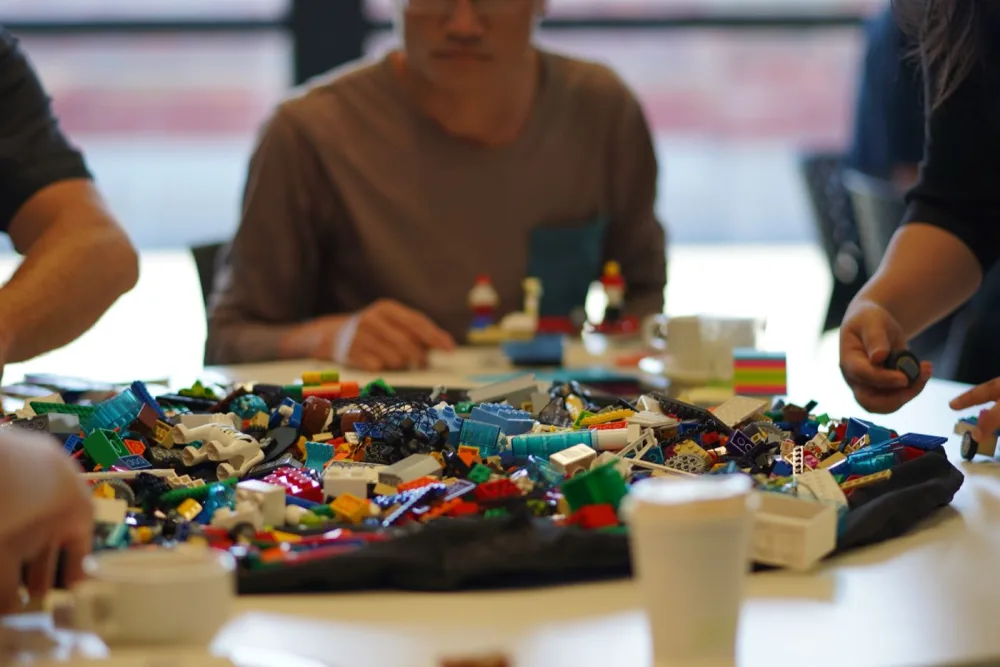
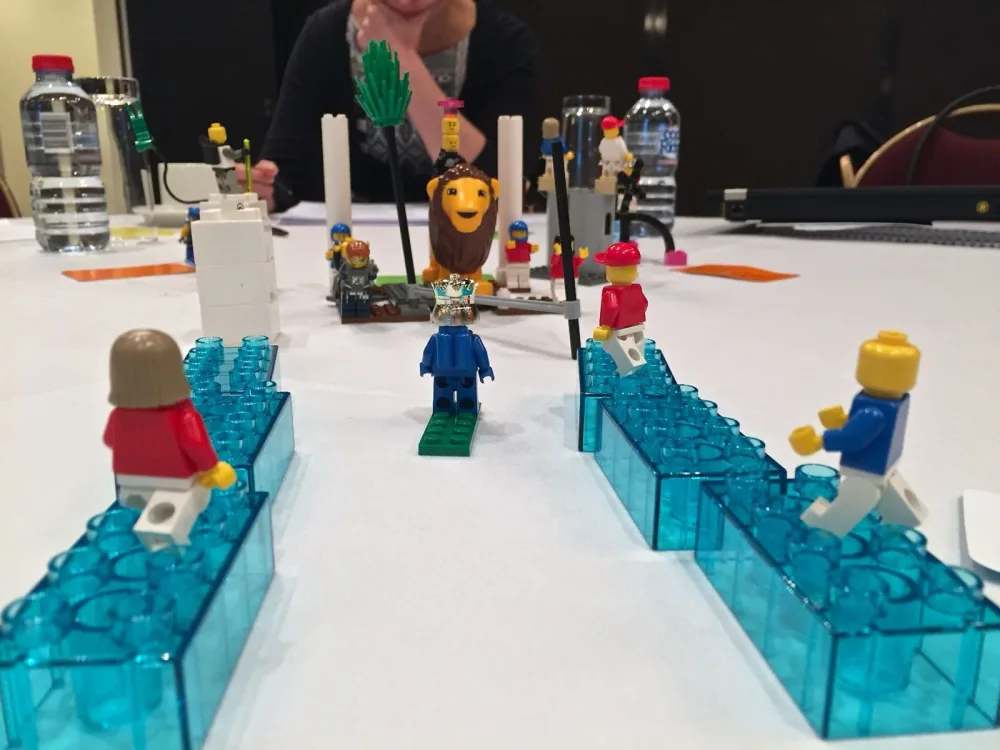
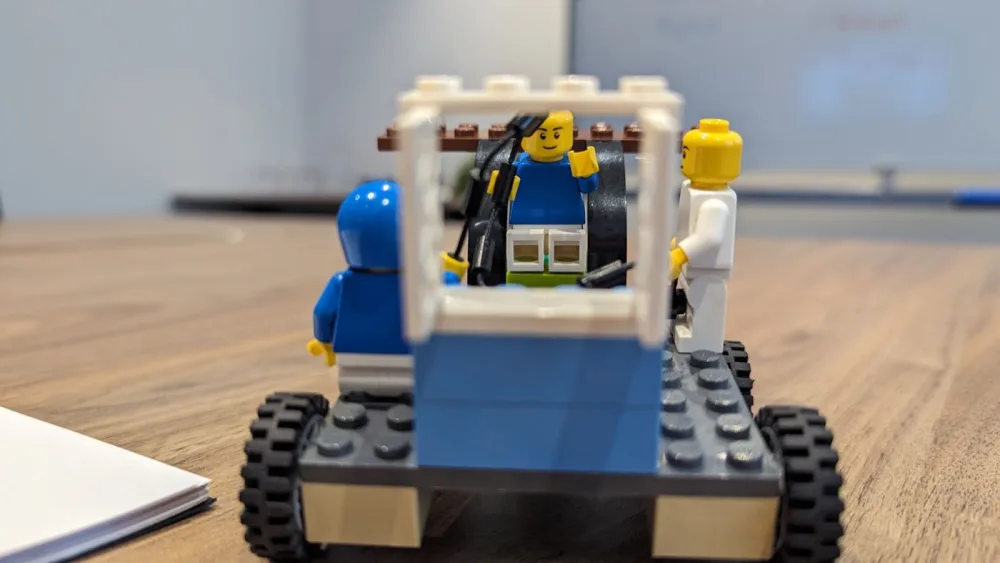
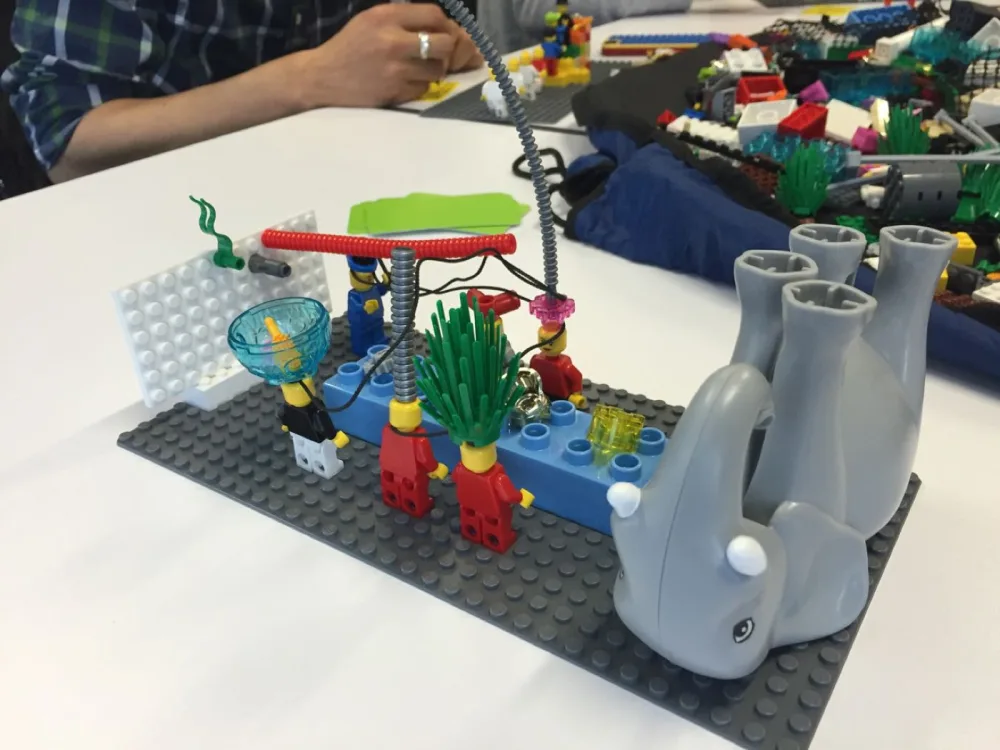
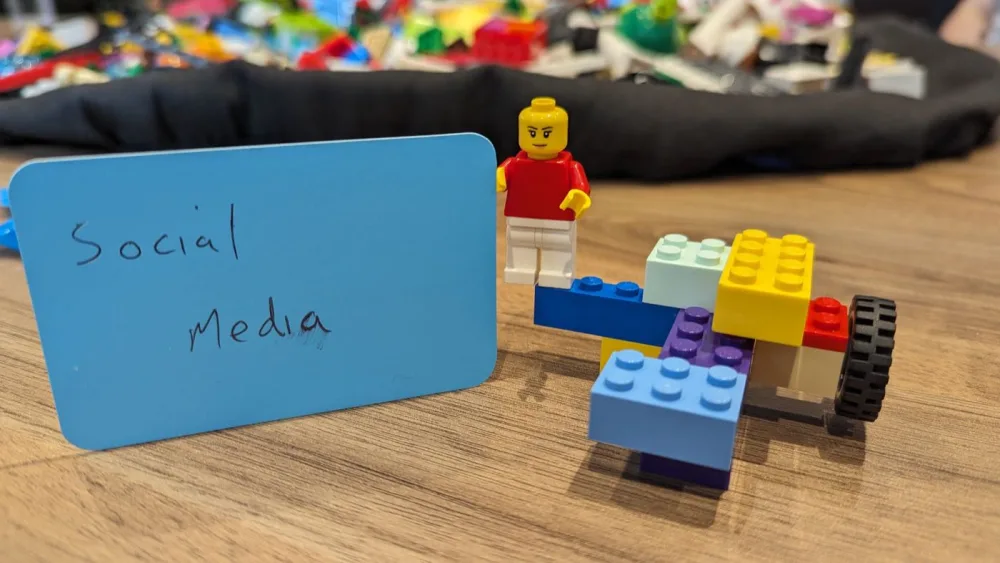
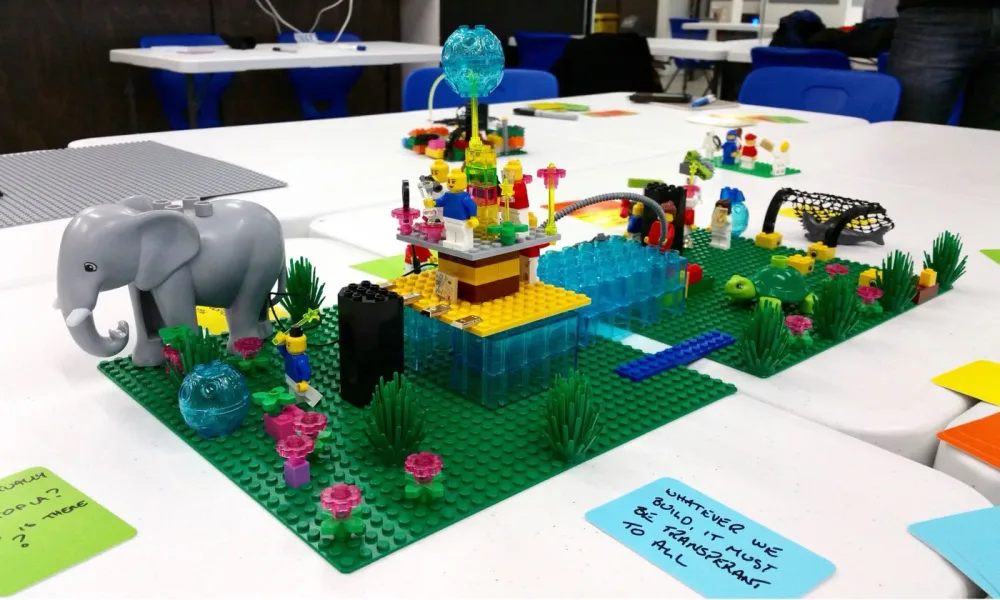
Real builds from real sessions — the models teams actually put on the table, and the sticky notes they wrote to go with them.
When a workshop isn't the right call.
A facilitated build earns its keep when the topic is complex, there's no single right answer, and you need everyone's input. Outside that, we'll tell you before you book. These are the rooms where the bricks stay in the box.
The topic is simple.
A well-run meeting gets there faster and cheaper — a build isn't worth the extra time.
There's one right answer.
Analysis beats building. Bring in the spreadsheet, not the bricks.
You already have the answer and want the team to accept it.
The method generates answers — it doesn't transmit them. If the decision is made, a workshop will only pretend otherwise.
You're training a specific skill.
These sessions surface thinking; they're not a teaching vehicle.
Fig. 02 — four rooms where the bricks stay on their side.
Half of what the free fit assessment exists for is telling you no before it costs you a budget line.
Whatever the room, the method holds.
Fig. 03 — the same three steps, every format
Every format runs the same three steps — everyone builds before anyone talks, every model gets shared, and the group builds the decision together. The full explanation is on what LEGO® Serious Play® actually is.
Every booking carries the same inclusions and pricing tiers, and the same guarantee: if the room doesn't decide, the follow-up session is on us. Sessions run at your workplace or venue across greater Melbourne, with travel Australia-wide by arrangement.
Where this sits in your capability plan.
If your development framework runs on 70:20:10, a facilitated session isn't the 10. Nothing is being taught here and no content is being transmitted — the room works on a live problem your team already owns, which puts it in the 70, and everyone contributes rather than the two most senior voices, which puts it in the 20.
Australian research on 70:20:10 found the experiential part fails when it's left unstructured, and that social learning is the glue holding the rest together. That's the gap this fills. The full argument, and the study, are here.
From AU$2,995 (+GST)
One method, one price backbone — from AU$7,995 once a job needs parallel rooms. Price follows the size of the decision, not the format you pick. See the full inclusions and tiers.
If the room doesn't decide, the follow-up session is on us.
Every session is built around the one or two questions we agree in your discovery call. If yours doesn't get there, we cover the follow-up to finish the job.
Three steps from enquiry to outcome.
Discovery call
No charge, no obligation. We map your objective and design the questions the session is built around.
The session
Facilitated end to end — everyone builds, everyone speaks, and the room works toward a decision it can act on.
Actions & 30-day follow-up
You leave with The Ignite Report — a written action list against names — and a follow-up call to check the actions landed.
Not sure which room you're in?
The fit assessment scores where your meetings lose the room and tells you straight whether a workshop will help — including when it won't.